

Sorting through car valuation and side by side comparison tools to get clear pricing, specs, and ownership costs is hard with so many sources. Many platforms either lack enough real listings, hide the context behind historical price trends, or skip official data on running costs and safety. This guide covers market coverage, historical context, price tools, and cost models so buyers can match a car comparison site to how they actually shop.
Table of Contents
Addapted
At a Glance
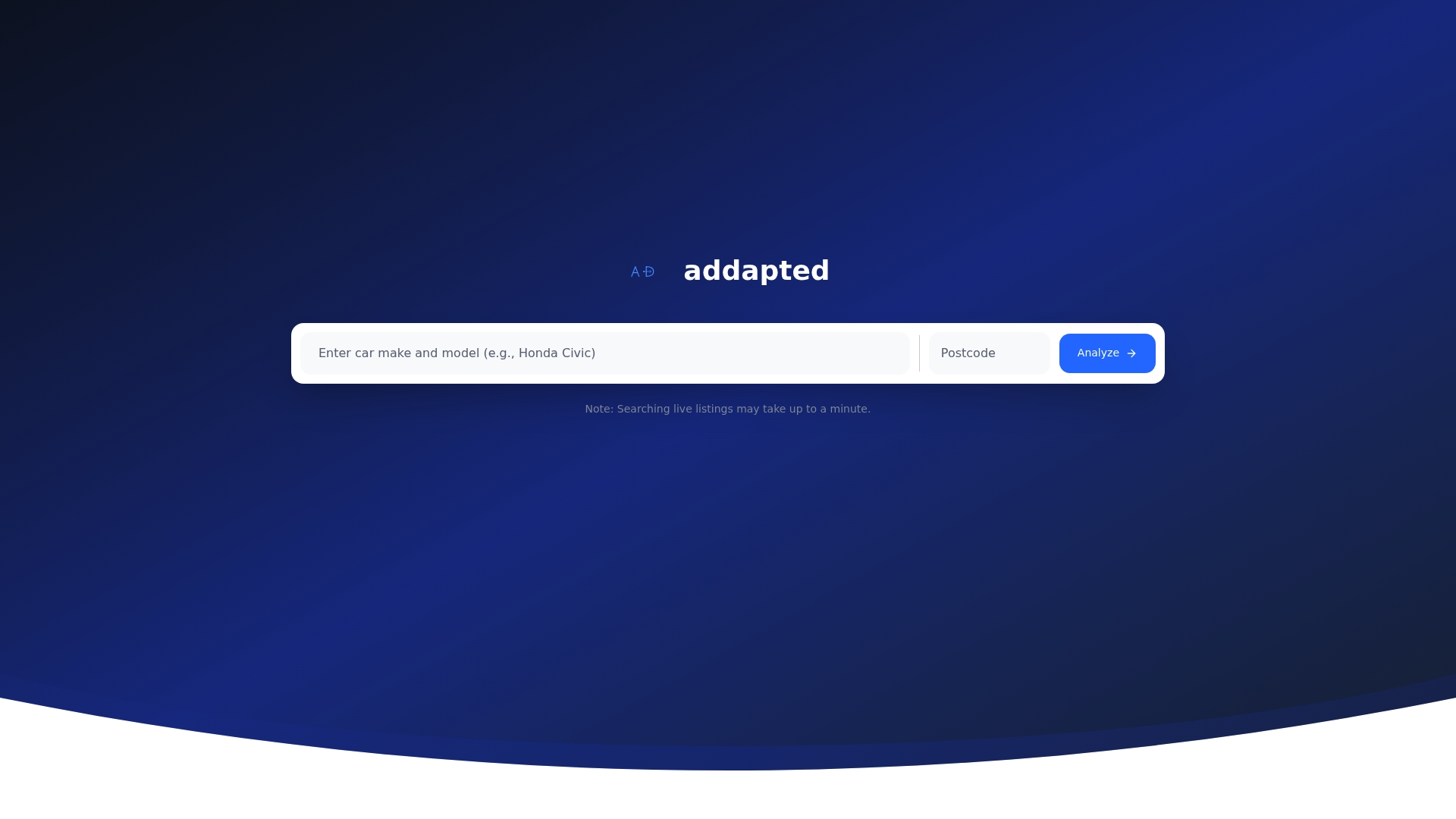
You can view the lowest, highest, and average prices for any model in seconds. Adapted runs an Instant Car Checker across multiple listings to show price ranges and valuation signals. The platform also analyzes mileage and price history, so listings appear with context. That quick snapshot helps you spot underpriced cars before you contact a seller.
Core Features
Addapted ties an Instant Car Checker, built in valuation tools, and Smart Price Comparison into one search flow that compares thousands of listings and returns model level price ranges. It analyzes mileage, depreciation trends, and listing history and tracks market trends to highlight likely price moves. Verified listings come with history reports and the system sends Instant Alerts when tracked cars change price.
Key Differentiator
Combines AI with comprehensive market data to provide personalized vehicle recommendations and instant price analysis. The AI blends listing history, sale prices, and mileage patterns to score listings by expected value. That ranking helps you focus on cars that match your budget and likely ownership costs.
Pros
Valuations load quickly and present the market context you need to make an offer with confidence. Filters and personalized recommendations let you narrow by budget, mileage, and history so you spend less time browsing. Verified listings reduce noisy or outdated entries and instant alerts catch price drops on cars you track. The interface accepts plain language queries so you can type a complex request and get targeted results.
Cons
- Relies on real time data, so slower internet connections can slow scans and delay alerts.
Who It's For
People actively shopping for a car who need precise market context before making offers. Buyers comparing multiple listings by price, mileage, and history will gain the most from this tool. It also suits shoppers who follow short term market trends and want notifications when opportunities appear.
Unique Value Proposition
An instant market snapshot that shows the lowest, highest, and average prices alongside a quick valuation. That setup lets you identify likely underpriced listings fast and decide whether to contact a seller, wait, or negotiate. For shoppers who track a shortlist of cars, this replaces manual spreadsheet checks and multiple listing tabs.
Real World Use Case
A buyer enters make, model, and budget and runs the Instant Car Checker to gather active listings. The valuation tools flag one listing as below market after reviewing mileage and price history. The buyer sets an instant alert and purchases when the price drops into their target range, completing the deal with greater confidence.
Website: https://addapted.net
Akamai
At a Glance
Deep integration of security and content delivery targets large scale enterprise needs. Akamai combines content delivery network capabilities with web security and privacy protections. The vendor materials emphasize protection and performance across global infrastructure.
Core Features
Akamai operates a global content delivery network (CDN) that moves assets closer to users to reduce latency. The service set includes web and cyber security solutions for threat mitigation and privacy and protection services to limit data exposure. Performance optimization tools aim to improve page load and media delivery while security features defend platforms from common online attacks.
Key Differentiator
The distinguishing trait is the platform level integration of delivery and security. That coupling lets traffic routing decisions consider both speed and threat posture. For large sites, this can simplify operations by centralizing caching and mitigation functions under one provider. The marketing positions this approach as tailored to high traffic, globally distributed workloads.
Pros
Akamai offers wide geographic reach through an established global infrastructure, which helps reduce latency for international visitors. Its security toolset covers common web threats and includes protections meant for large scale environments. The combined delivery and security model cuts down on toolchain complexity for teams that manage both performance and risk. The vendor notes enterprise customers rely on these capabilities for mission critical applications.
Cons
- Limited public detail: specific feature lists and technical specs are not fully itemized in the provided content.
- Cost barrier: pricing may be high for smaller operations with tight budgets.
- Operational complexity: the services may require specialized staff to configure and maintain properly.
When It May Not Fit
Small businesses with limited technical resources will likely find the offering more than they need. Organizations without an in house networking or security engineer may struggle to deploy and tune features. Projects with tight budgets should plan for vendor engagement and operational overhead before committing.
Who It's For
Large enterprises and digital properties with global audiences and substantial traffic volumes. Security teams that need integrated mitigation with delivery controls will get the most value. IT groups prepared for vendor led integration and ongoing tuning will extract more from the platform.
Real World Use Case
A major e commerce site uses Akamai to speed page loads for shoppers worldwide while applying DDoS protections at the edge. Caching and routing reduce origin load during peak traffic. Security rules block malicious traffic before it reaches backend systems.
Pricing
Pricing is listed as not applicable for informational purposes. Public tiered rates are not provided on the site. Procurement typically involves direct sales conversations for enterprise level engagements.
Website: https://edmunds.com
Autolist
At a Glance
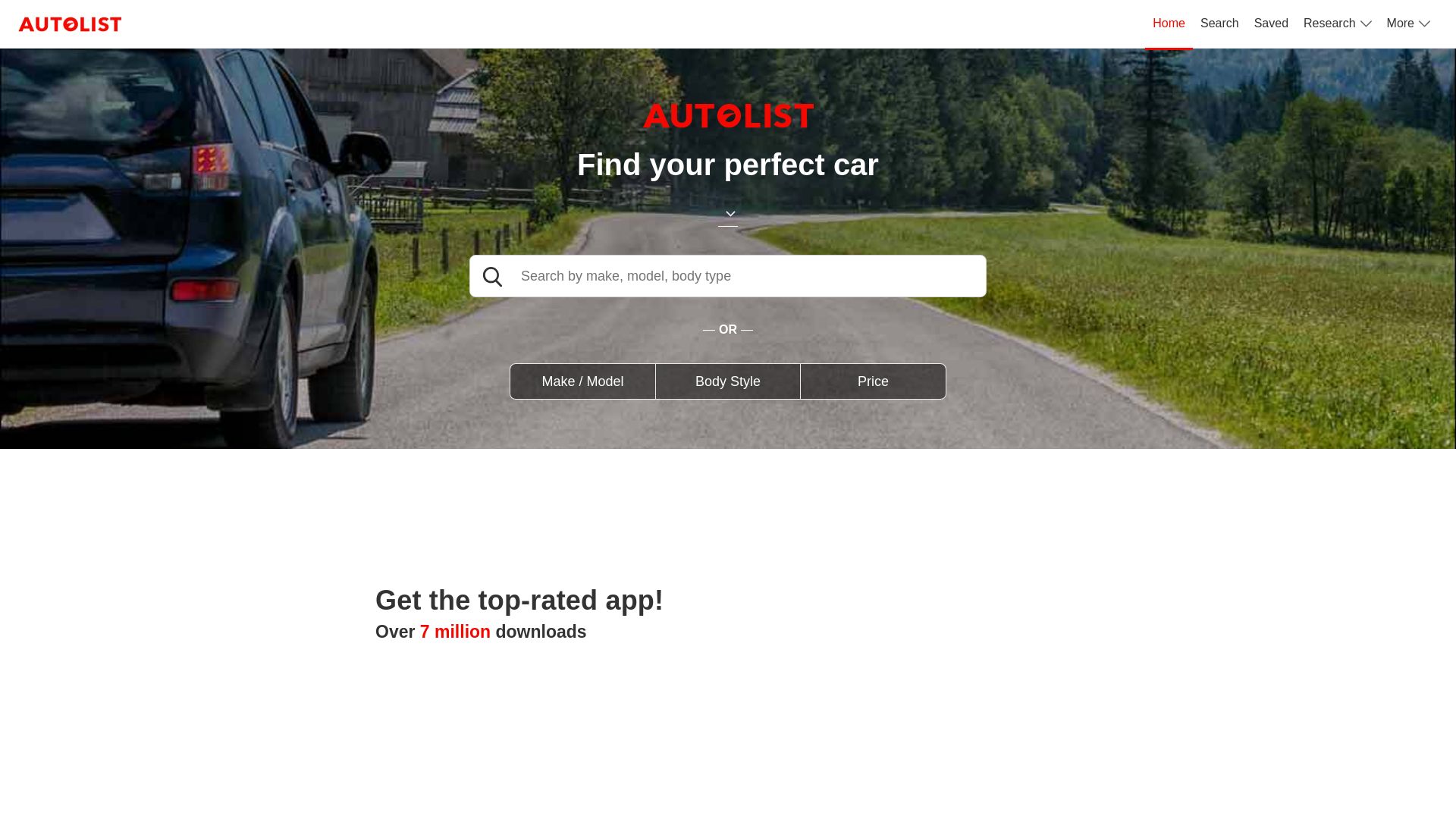
Autolist reports over 5 million current and historic vehicle listings aggregated from more than 100 sources across the U.S. That breadth makes it useful when you compare cars side by side to spot price outliers and rare trims. The site also includes mobile apps for Android and iOS for searching on the go.
Core Features
Autolist aggregates listings from a wide set of classifieds, dealer sites, and marketplaces and surfaces combined search results. It offers price analysis, historical pricing charts, and review summaries to help you judge whether a listing is competitively priced. The platform pairs those tools with mobile apps and market research reports aimed at clarifying supply and demand.
Key Differentiator
The central differentiator is scale. That listing figure above fuels a market view most single-source search tools cannot match. For buyers who value a large cross-section of listings and historical price context, Autolist trades deeper seller interaction for broader search coverage.
Pros
Autolist brings broad inventory to one place, which increases the chance of finding rare trims or well priced used vehicles. Its research tools tie listing prices to recent history, helping you see whether a price is high, low, or inline with market trends. The free access and mobile apps make quick comparisons practical when you are looking at multiple listings across locations.
Cons
- Some aggregated listings appear outdated or show inaccurate prices, which forces extra verification with the original seller.
- Search and filter menus can feel dense because of the number of sources and options presented.
- The site acts mainly as an aggregator, so there is limited direct messaging or listing management for sellers.
When It May Not Fit
If you need guaranteed verified listings or direct seller communication, Autolist may be the wrong fit. Dealers who require a platform for managing inventory and messaging customers will find limited seller tools. Buyers wanting only locally verified cars should use a site that vets listings directly.
Who It's For
Autolist fits buyers and sellers who want a broad snapshot of the U.S. market and quick access to many listings. It suits shoppers who run side by side comparisons across multiple sources and value historical price context. It also helps dealers who want market insight rather than a listing management solution.
Real World Use Case
A first time buyer compares several used SUVs by model year, mileage, and seller type across Autolist to identify price bands and common options. They read aggregated reviews and price history, then contact the seller listed on the original source to confirm condition and availability.
Website: https://autolist.com
iSeeCars
At a Glance
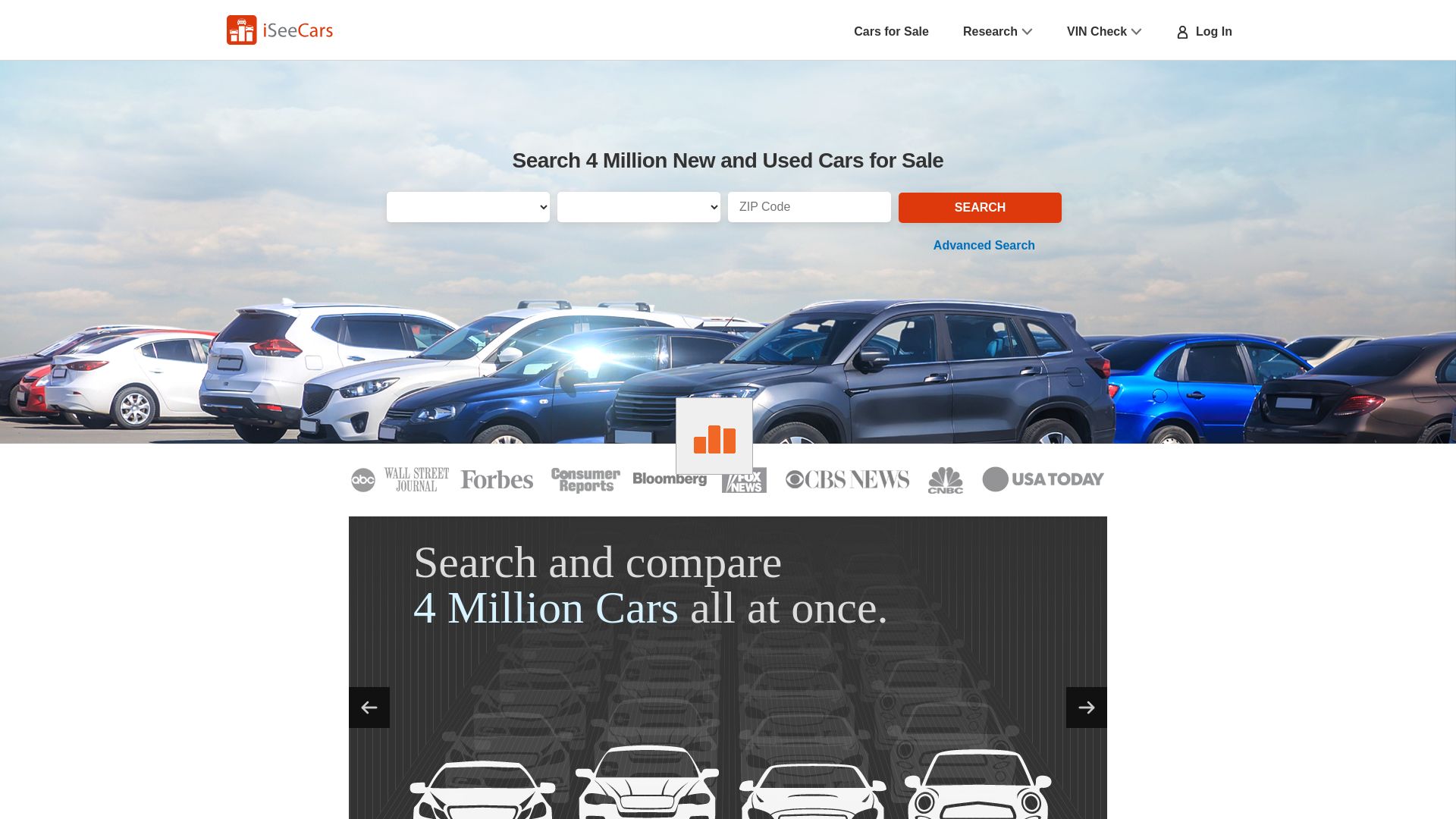
iSeeCars reports it aggregates data from over 30 million used car listings. The site pairs that dataset with rankings and studies that highlight deals and model reliability. That scale makes it a strong reference when you need a broad market view quickly.
Core Features
iSeeCars combines a search and comparison engine with tools for valuation, VIN analysis, and vehicle history checks. The platform's content mix includes market reports, model rankings, and research articles, and the vendor also states the site has access to over 4 million listings for live searches. These parts work together so you can compare specs, prices, and reported histories in one place.
Key Differentiator
iSeeCars separates itself by claiming statistical rankings based on a very large listings pool. That ranking approach highlights deals by model and trim, rather than relying only on seller tags. For buyers who value a numbers-based shortlist, that ranking method speeds up narrowing options.
Pros
iSeeCars has broad listing coverage and deep filters, which helps you zero in on exact trims, mileage bands, and price brackets without jumping between multiple sites. The site offers free VIN checks and vehicle history tools, which let you confirm accident and title notes before contacting sellers. Research articles and studies add context on model reliability and resale trends, helping you interpret prices rather than guessing.
Cons
-
Page errors and broken links exist on the site. These interruptions can force repeat searches or require alternative sources.
-
The site focuses on aggregation and rankings over direct transaction support. You will still rely on dealers or marketplaces to complete purchases.
-
Data depends on third-party listings. Trustpilot and other feedback highlight occasional discrepancies in listing details or price history.
When It May Not Fit
If you need a platform that completes sales or holds inventory, iSeeCars will frustrate you because it does not facilitate direct transactions. Buyers who require guaranteed, audited vehicle histories from a single provider may prefer paid, seller-backed reports. Dealers wanting integrated listing management tools should look for a marketplace that offers listing upload and lead management instead.
Who It's For
This site fits car buyers who want to compare many makes and models quickly and who prefer numbers to marketing descriptions. It also suits sellers and analysts who need market trend context to set competitive prices. Enthusiasts researching model reliability and resale history will find the rankings and studies useful.
Real World Use Case
A shopper compares used midsize sedans by price, mileage, and reliability rank to create a short list. They run VIN checks on each candidate, read the site study on common faults for that model year, and use valuation tools to spot listings priced below the market average. That workflow cuts time spent calling dealers and reduces the chance of missing a well-priced option.
Website: https://iseecars.com
CarComparisonAI
At a Glance
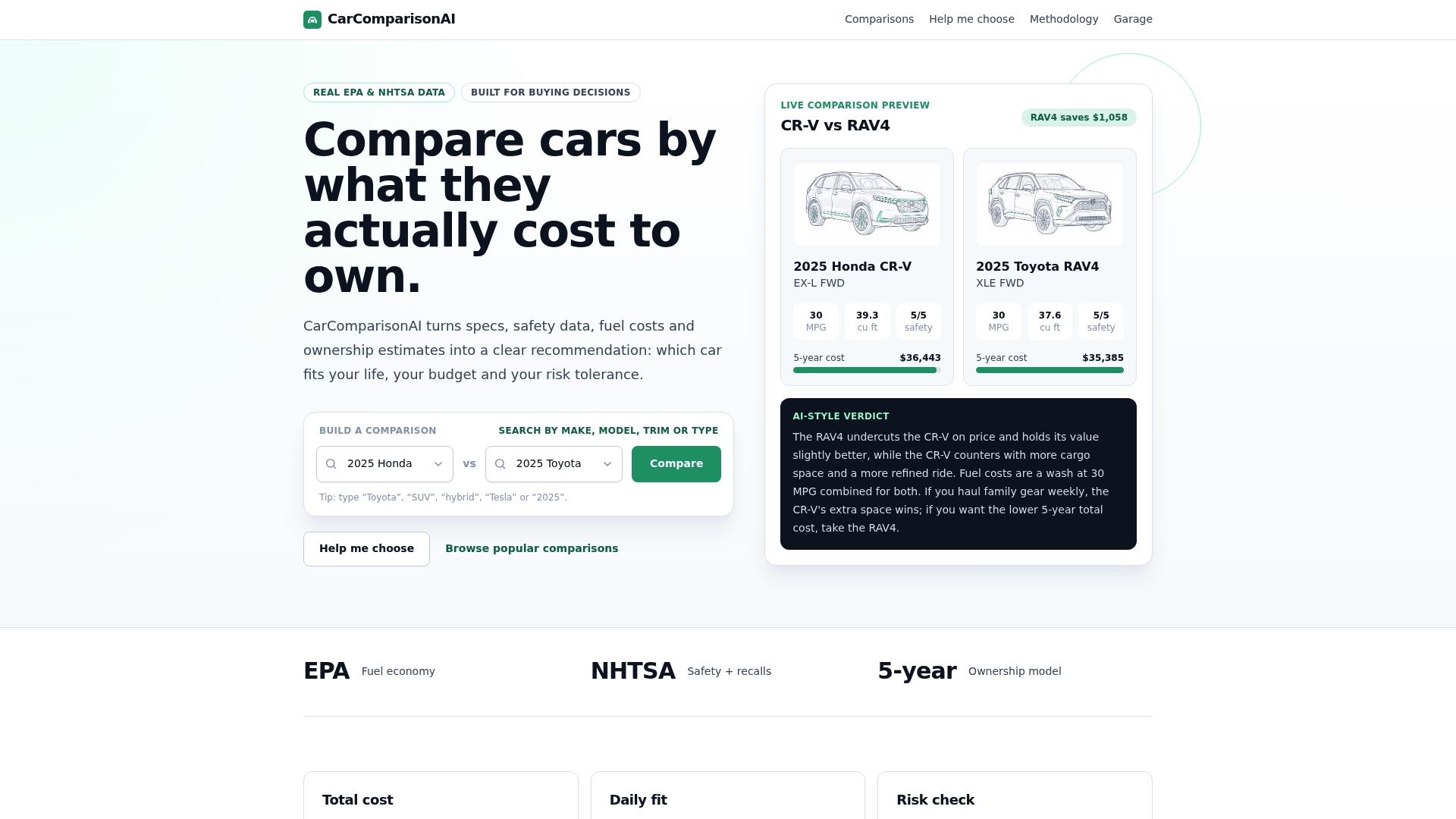
CarComparisonAI pulls EPA fuel economy and NHTSA safety ratings into its side by side comparisons to show real ownership cost differences. The tool pairs official data with an adjustable ownership cost model. Plain language verdicts explain trade offs so you can see why one model costs more to run than another.
Core Features
CarComparisonAI compares cars side by side by total ownership cost, safety, size, and MPG while showing recalls and complaint data from official sources. It produces personalized cost estimates when you enter miles driven, ownership years, and fuel or electricity costs. The site also offers plain language verdicts that translate numeric trade offs into a short recommendation.
Key Differentiator
CarComparisonAI combines official government vehicle data with a customizable ownership cost model to produce practical advice for buyers. That blend of EPA and NHTSA inputs with adjustable assumptions lets you test scenarios like high mileage or rising fuel prices. The result is a comparison that explains the financial and safety trade offs in everyday language.
Pros
CarComparisonAI uses official government and safety data for transparency, which makes the numbers easier to trust when comparing models. Its personalized cost estimates let you change assumptions for miles driven, ownership years, and fuel or electricity costs so the output reflects your situation. The plain language verdicts and the inclusion of recalls and complaint records keep comparisons focused on decision factors people actually care about.
Cons
- Limited financial context: the site does not include insurance, loan, or dealer financing information, so you must consult other sources for complete purchase cost.
- Reliant on estimates: the accuracy of ownership cost figures depends on the inputs you provide, which can vary widely by driver.
- Modeling assumptions: the cost of ownership model uses assumptions that may not match every use case, and those assumptions are visible but not automatically tailored to unique scenarios.
When It May Not Fit
If you need a single tool that handles financing, insurance, and dealer offers, this comparison will feel incomplete. Buyers who prefer exact, verified out of pocket quotes for insurance or monthly payments will need to combine this with lender or insurer tools. Also, users unwilling to set realistic driving and cost assumptions may see results that do not match their real expenses.
Who It's For
This site fits car buyers who prioritize understanding long term running costs and safety differences when choosing between models. It helps informed shoppers who are comfortable entering driving habits to get tailored ownership estimates. Families and budget conscious buyers who weigh safety and operating cost together will find the comparisons most useful.
Real World Use Case
A family set on a new SUV runs three models through CarComparisonAI, entering their expected 15,000 annual miles and eight years of ownership. The tool highlights fuel cost differences, safety ratings, and a plain language verdict that identifies the most economical and safest option. That output helps the family narrow their shortlist before visiting dealers.
Website: https://carcomparisonai.com
Comparison of alternatives
When comparing car comparison platforms, Addapted.net clearly distinguishes itself with its real-time data analysis, and personalized vehicle valuation insights, making it a fantastic resource for those refining their purchasing strategies.
Listings scope and aggregation
Among competitors, iSeeCars offers data aggregation from over 30 million listings, providing the largest dataset for comparative analysis. This breadth benefits users seeking insights across numerous sources. In contrast, while Addapted.net aggregates effectively, it emphasizes verified and contextually processed datasets with real-time valuations.
Cost and ownership considerations
CarComparisonAI excels in contextualizing ownership costs by integrating detailed financial and operational models based on user input. While Addapted.net provides immediate price evaluations, CarComparisonAI enables scenario testing, supplementing the decision-making process for prospective buyers.
Best fit
- Buyers seeking precise and real-time market snapshots for used cars will find Addapted.net the ideal tool for streamlined evaluations.
- Professionals or researchers requiring aggregated and extensive vehicle databases should consider iSeeCars for its listing coverage.
- Families prioritizing ownership costs and safety when comparing models will find CarComparisonAI tailored to their needs.
- Users valuing immediate access and historical trends across mobile devices might prefer Autolist's broad listing aggregation and app availability.
Our pick
Addapted.net offers an combination of real-time insights and valuation tools, making it an excellent choice for buyers determined to make informed vehicle purchases. Situations requiring extensive listing reviews or in-depth ownership cost predictions might favor other platforms, yet for insights with verification, Addapted.net remains the top choice.
This comparison showcases platforms based on car valuation, personalization, and key feature strengths.
| Platform | Key Differentiator | Best For | Pricing | Notable Limitation |
|---|---|---|---|---|
| Addapted | Instant price analysis and personalized vehicle recommendations | Active car shoppers seeking market insights | Price not published | Relies on real-time data, which can delay under low-speed networks |
| Akamai | Integration of content delivery and security | Large enterprises managing traffic and threats | Price not published | Requires specialized staff for full feature utilization |
| Autolist | Extensive vehicle listing aggregation | Buyers seeking a wide inventory for comparison | Free | Some listings may lack updated or accurate information |
| iSeeCars | Statistical rankings and extensive dataset | Data-driven buyers analyzing reliability and trends | Free | Instances of outdated or incomplete listing data |
| CarComparisonAI | Combines official data for ownership cost estimates | Shoppers prioritizing cost and safety evaluations | Free | Does not handle financing or direct purchase processes |
Finding the Right Tool to Compare Cars Side by Side
Car shoppers face a challenge when comparing listings from multiple sources. Differences in price, mileage, and history make it hard to spot good deals quickly. Addapted addresses this by showing the lowest, highest, and average prices for any model instantly. It analyzes pricing history and mileage, giving market context that helps buyers find underpriced cars before they contact sellers.
Addapted combines instant car checking with car valuation tools built to reduce guesswork. If you want to compare cars side by side with real-time pricing and detailed market signals, visit Addapted. See how fast valuations and alerts can improve your confidence and save you time when selecting your next car.
FAQ
How does Addapted help in comparing car prices quickly?
Addapted provides an Instant Car Checker that quickly shows the lowest, highest, and average prices for any model. This feature analyzes multiple listings to give users a clear price range, making it easier to identify potential deals. Access this tool to effortlessly compare car valuations before reaching out to sellers.
What is the difference between Addapted and Autolist?
Autolist aggregates listings from various sources, offering a broad inventory, which increases the likelihood of finding rare trims. Addapted excels at price analysis and valuation tools, allowing users to access detailed pricing information, mileage history, and market trends, enabling quicker and more informed purchasing decisions.
Which platform is better for instant price alerts?
Addapted stands out with its Instant Alerts feature, notifying users when tracked cars change in price. This capability enables buyers to act swiftly on potential deals, helping them make offers with more confidence. Shoppers looking for immediate updates on listings will find this function particularly useful.
Can I use Addapted if I am only interested in local listings?
While Addapted provides a wide range of listings, it may not focus primarily on local markets. However, users can filter and set alerts for specific regions to ensure they receive relevant information tailored to their location. This approach allows local shoppers to stay informed about nearby deals.
How does Addapted generate its vehicle recommendations?
Addapted combines AI with market data to score listings based on expected value, mileage patterns, and historical trends. This ensures users receive personalized recommendations for vehicles that match their budgets and ownership costs, streamlining the car-buying process. Utilizing this feature can enhance your car search experience.