

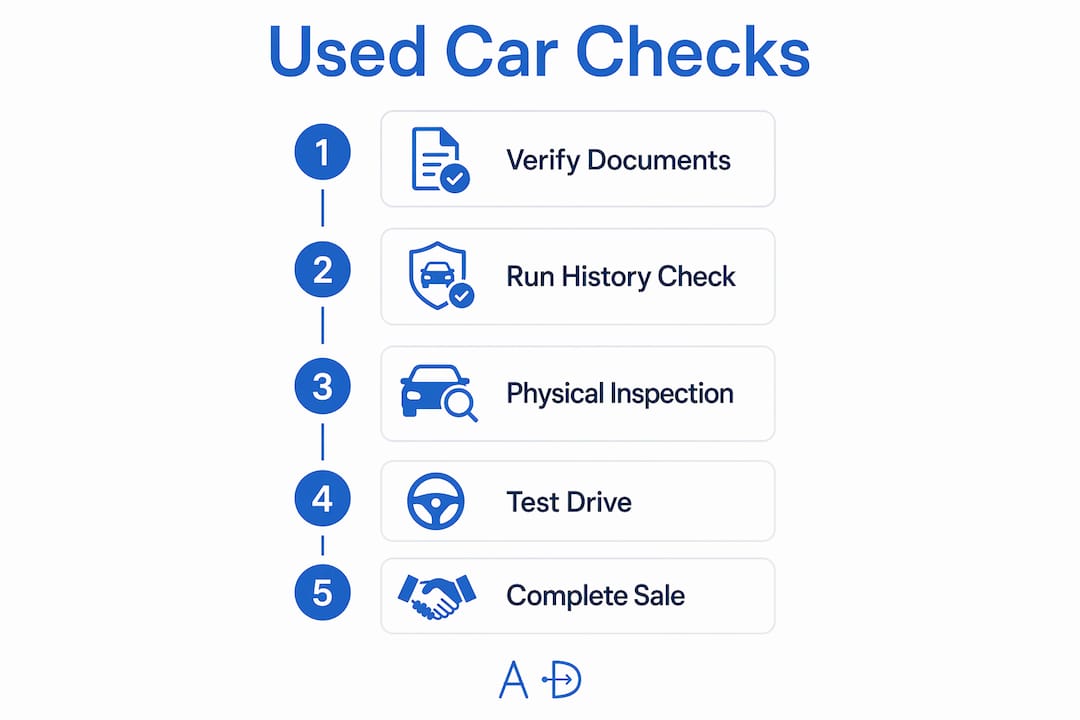
Buying a used car in the UK requires checking specific documents, vehicle history, and mechanical condition before you hand over a single pound. The formal term for this process is a pre-purchase inspection, and it covers everything from the V5C logbook to the condition of the engine bay. Skip any part of this process and you risk buying a stolen vehicle, inheriting outstanding finance, or paying over the odds for a car with hidden damage. This guide walks you through every step, so you arrive at the transaction prepared and leave with a car you can trust.
What documents should you verify before buying a used car in the UK?
The V5C logbook is the single most important document in any used car transaction. Check that the keeper's name and address on the V5C match the seller's ID exactly. Then confirm the Vehicle Identification Number (VIN) on the document matches the VIN stamped on the car itself, typically found on the dashboard and door frame. A mismatch between seller ID and V5C details is a major red flag for a stolen vehicle. Walk away immediately if the numbers do not align.
The V5C also contains a watermark and security features. Hold it up to the light and look for the DVLA watermark. A missing or blurry watermark suggests a forged document.
Beyond the V5C, you need to examine these key documents:
- V5C/2 new keeper slip: This section of the logbook lets you tax the car immediately after purchase. Without it, you cannot legally drive the vehicle away.
- MOT certificate: Verify the certificate is genuine by cross-referencing the test number on the DVSA's official MOT history checker. Check for mileage jumps between tests, which can indicate odometer tampering.
- Service history: Request every invoice, not just a stamped booklet. A quality service history includes itemized invoices for timing belt replacements, brake fluid changes, and clutch repairs. Stamps alone prove nothing.
- Finance settlement letter: If the seller claims the car is finance-free, ask for written confirmation from the lender.
Pro Tip: Ask the seller to show you the V5C before you even view the car in person. If they hesitate or claim it is "in the post," treat that as a serious warning sign.
MOT advisories deserve special attention. Advisory notes on tires, brakes, and suspension signal near-future repair costs. Use them as negotiating leverage to reduce the asking price.
How to perform a thorough vehicle history check
A vehicle history check is a paid database search that reveals what the car has been through before it reached the seller's driveway. These checks typically cost between £10 and £20 and return results within minutes. That is a small price compared to the cost of repossession or a major repair bill.
A standard history check covers:
- Outstanding finance: If a lender still has a financial interest in the car, they legally own it. An outstanding finance report means the buyer risks repossession after purchase, even if they paid the seller in full.
- Theft records: The check cross-references national police databases to confirm the car has not been reported stolen.
- Insurance write-offs: A Category S or Category N write-off means the car was previously declared a total loss. Category S vehicles have structural damage; Category N vehicles have non-structural damage. Both affect resale value and insurability.
- Mileage discrepancies: Odometer inconsistencies across MOT records suggest mileage tampering, a practice known as "clocking."
Pro Tip: Run the history check before you travel to view the car. If the report shows outstanding finance or a write-off category, you save yourself the trip entirely.
If you lack mechanical knowledge, bring an expert or hire a professional inspector before committing to any purchase. Professional inspection services typically charge between £100 and £200 and can identify faults that a history check alone will not reveal.
What physical inspections should you conduct on a used car?

Physical condition tells you what documents cannot. The golden rule is to never view a used car in rain, at night, or when dirty. Poor conditions hide paint defects, rust, and panel damage. Always inspect in bright daylight with the car freshly washed.
Exterior checks
Work around the car methodically. Crouch down and look along each panel from a low angle. Ripples or color variations in the paint suggest previous bodywork repairs. Check panel gaps between doors, the hood, and the trunk lid. Uneven gaps indicate accident damage or poor repair work. Examine the tires for uneven wear patterns, which point to suspension or alignment problems.
Interior and cabin checks
Sit in every seat and check for excessive wear on the driver's seat, steering wheel, and pedals. High wear on a car with suspiciously low mileage is a contradiction worth questioning. Test every electronic function: windows, mirrors, air conditioning, heated seats, and the infotainment system. Check the carpets and boot lining for dampness, which signals a water leak.
Under the hood
Check all fluid levels: engine oil, coolant, brake fluid, and power steering fluid. Pull out the oil dipstick and look at the oil color. Black, gritty oil suggests the car has not been serviced recently. Creamy or milky oil is a serious warning sign of a blown head gasket. Look for any signs of oil or coolant leaks around hoses and the engine block.
Pro Tip: Ask the seller to let the engine cool completely before your visit, then start it yourself. A cold start reveals noises and smoke that a warm engine masks.
How to conduct an effective test drive
A test drive is not a formality. It is your best opportunity to detect mechanical faults before they become your problem. Follow these steps:
- Start the engine cold and listen for any rattles, ticking, or rough idling. These sounds often disappear once the engine warms up.
- Drive for at least 15 minutes covering town roads, motorway speeds, and uneven surfaces. A short drive around the block reveals nothing useful.
- Test the brakes firmly at a safe speed. The car should stop in a straight line without pulling to one side or producing grinding noises.
- Assess the steering for excessive play or vibration. A car that wanders or shakes at motorway speed has a suspension or wheel-balance problem.
- Work through every gear in a manual car. Gears should engage cleanly without crunching. In an automatic, shifts should be smooth and prompt.
- Check the dashboard immediately after starting and again during the drive. Any warning lights that appear and stay on require investigation before you proceed.
- Listen for suspension noise over speed bumps and rough patches. Clunking or knocking sounds indicate worn bushings or shock absorbers.
Pro Tip: Drive the car on a motorway if at all possible. Vibrations, wind noise, and transmission behavior at higher speeds reveal faults that town driving simply cannot expose.
If you are not confident evaluating what you hear and feel, bring someone who is. The cost of a knowledgeable companion is zero. The cost of missing a gearbox fault is not.
What to do after buying a used car in the UK
The transaction does not end when money changes hands. Several legal steps must happen immediately:
- Tax the vehicle: Vehicle tax does not transfer from the previous owner to you. Use the V5C/2 new keeper slip to tax the car online through the DVLA before you drive it away.
- Arrange insurance: Your insurance policy must be active before the car moves. Driving without insurance is a criminal offense in the UK.
- Notify the DVLA: Complete the new keeper section of the V5C and send it to the DVLA within 28 days. The seller should retain the main part of the V5C and send it separately.
- Document the transaction: Keep all payment receipts and photographs taken at the point of sale. Record the buyer and seller details, vehicle specifications, agreed price, and both signatures on a written receipt.
- Store your paperwork: Keep the V5C/2 slip, MOT certificate, service history, and purchase receipt together in a safe place.
A written receipt protects you if a dispute arises later about the car's condition or agreed sale price. Do not skip this step, even in a private sale.
Key Takeaways
A thorough pre-purchase inspection covering documents, vehicle history, physical condition, and a proper test drive is the only reliable way to buy a used car in the UK without costly surprises.
| Point | Details |
|---|---|
| Verify the V5C first | Check that the VIN, keeper name, and address match the seller's ID before anything else. |
| Run a history check | A £10–£20 vehicle history check reveals outstanding finance, theft records, and write-offs. |
| Inspect in good conditions | Always view the car in daylight, dry weather, and clean condition to spot damage accurately. |
| Test drive for 15+ minutes | Cover town roads, motorway speeds, and rough surfaces to expose mechanical faults. |
| Complete post-sale paperwork | Tax the car using the V5C/2 slip and notify the DVLA before driving away. |
What I've learned from watching buyers get it wrong
Most costly used car mistakes share one common thread: the buyer was in a hurry. They skipped the history check because the seller seemed trustworthy. They accepted stamps in a service booklet without asking for invoices. They did a five-minute test drive around the block and called it done.
The V5C verification step catches more fraud than any other check. I have seen buyers purchase vehicles where the seller's name did not match the logbook, and they only noticed weeks later when the car was repossessed. Verifying V5C details against the seller's photo ID takes two minutes and costs nothing.
Service history is another area where buyers accept surface evidence. A stamped booklet looks convincing, but stamps can be forged. Invoices cannot. If a seller cannot produce itemized invoices for major work like a timing belt change, assume the work was never done and price that into your offer or walk away.
The test drive is where mechanical reality meets seller claims. A seller who rushes you through a short drive, insists on coming along, or discourages motorway driving is hiding something. A car with nothing to hide can handle a proper 15-minute test.
Finally, never underestimate the value of a professional inspection if you are not mechanically confident. Paying £150 for a qualified mechanic to inspect a £6,000 car is not excessive. It is rational. The inspection either confirms the car is worth the price or gives you grounds to negotiate or walk away.
— Steak
How Addapted helps you check the price before you commit

Knowing what a used car should cost is just as important as knowing its condition. Addapted gives you instant access to real-time pricing across multiple listings, so you can see the lowest, highest, and average prices for any model before you negotiate. The platform's car check tools analyze mileage, price history, and listing details in seconds, giving you a clear benchmark to work from. If the seller's asking price sits well above the market average Addapted shows you, you have the data to push back or walk away with confidence. Use it alongside your physical and document checks for a complete picture of the car's true value.
FAQ
What documents should I get when buying a used car?
The V5C logbook, MOT certificate, and full service history with invoices are the three documents every buyer must obtain. The V5C/2 new keeper slip is also required to tax the vehicle immediately after purchase.
How much does a vehicle history check cost in the UK?
A vehicle history check typically costs between £10 and £20 and returns results within minutes. The check covers outstanding finance, theft records, insurance write-offs, and mileage history.
What paperwork do I need when buying a car privately in the UK?
In a private sale, you need the V5C logbook, a written receipt signed by both parties, the MOT certificate, and proof of insurance before driving away. Notify the DVLA of the ownership change within 28 days.
How long should a used car test drive last?
A test drive should last at least 15 minutes and cover town roads, motorway speeds, and uneven surfaces. Shorter drives do not expose transmission, suspension, or high-speed stability issues.
Can vehicle tax transfer from the seller to me?
Vehicle tax does not transfer in the UK. The previous owner's tax ends at the point of sale, and you must tax the car using the V5C/2 new keeper slip before driving it away.