
TL;DR:
- Buying a used car in the UK requires researching its history, inspecting it thoroughly, and completing all legal paperwork before driving away. Using free and paid reports helps identify hidden issues like outstanding finance or prior accidents, reducing risks. Proper inspection, negotiation based on evidence, and confirming legal ownership protect buyers and ensure a confident purchase.
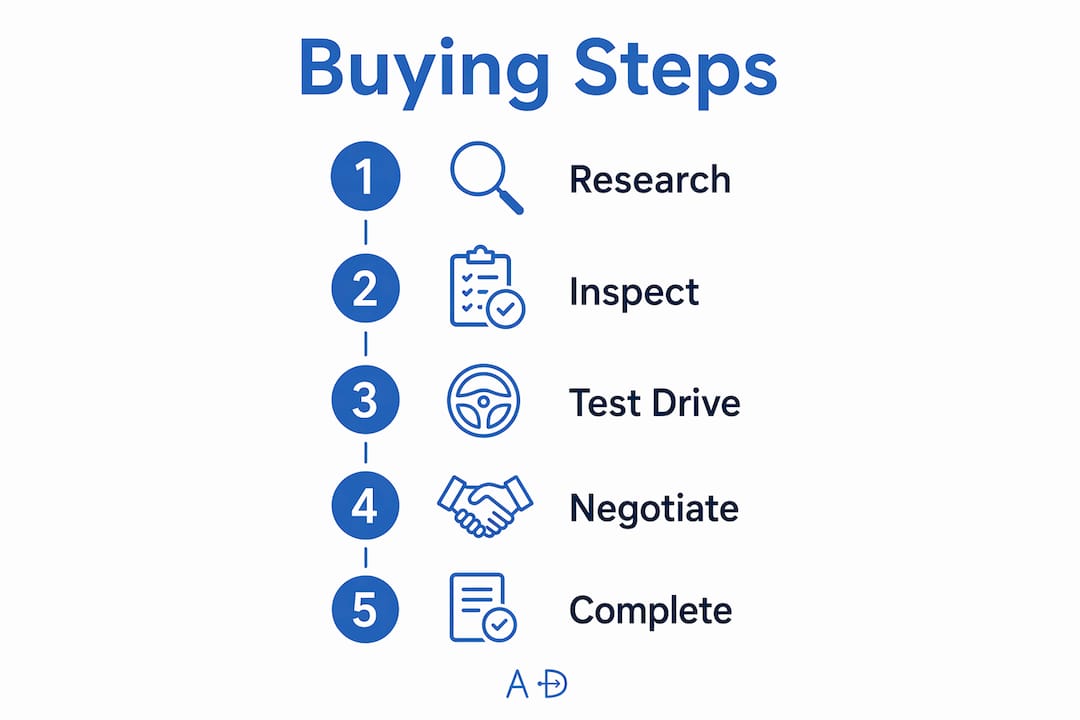
Buying a used car in the UK means verifying the vehicle's history, completing a thorough inspection, negotiating the price, and handling all legal paperwork before you drive away. Knowing how to buy a used car in the UK correctly saves you from costly surprises, from hidden finance on the vehicle to undisclosed accident damage. This guide covers every step, from your first search to the moment you collect the keys, so you can buy with confidence and avoid the mistakes that catch most first-time buyers off guard.
How to research a used car's history and value before buying
Researching a car before you view it is the single most important step in the buying process. A vehicle that looks perfect in photos can carry outstanding finance, a clocked odometer, or a Category S write-off marker that slashes its real-world value.

Start with the free MOT history check
The free MOT history check on gov.uk covers all vehicles tested since 2005 and shows mileage readings, pass or fail results, and advisory notices. That mileage trail is your first defense against clocking. If the recorded mileage drops between tests, walk away immediately.
Beyond MOT records, a paid vehicle history report reveals whether the car carries outstanding finance, has been reported stolen, or was previously written off by an insurer. These reports typically cost under £20 and can save you thousands. Cross-reference the report data with the seller's story. Any gap between the two is a red flag.
Check service history and benchmark the price
A full service history, ideally stamped by a franchised dealer or specialist, confirms the car was maintained on schedule. Missing stamps do not automatically disqualify a vehicle, but they reduce its value and your confidence in the mechanical condition.
Once you have the history, benchmark the asking price using an online car valuation tool. Tools that show the lowest, highest, and average prices for a specific model and mileage give you a clear picture of whether the seller is asking a fair price or padding the margin. Addapted provides real-time pricing across multiple listings so you can see exactly where any car sits in the current market.
Pro Tip: Run the registration through a car history check before you even book a viewing. It takes five minutes and eliminates the worst risks before you spend time or travel money.
| Check | What it reveals | Cost |
|---|---|---|
| MOT history (gov.uk) | Mileage trail, faults, advisories | Free |
| Vehicle history report | Finance, theft, write-off status | Under £20 |
| Service history review | Maintenance consistency | Free (request from seller) |
| Online valuation | Fair market price range | Free |
Where can you find used cars for sale in the UK?
The source you buy from shapes your legal rights, your risk level, and your room to negotiate. Each channel has a distinct profile.
- Private sellers typically price lower than dealers because they carry no overhead. The trade-off is that you buy with no statutory warranty and limited legal recourse if problems emerge. Buying privately can be cheaper, but it demands more due diligence on your part.
- Franchised dealers sell manufacturer-approved used cars, often with multipoint inspections and short-term warranties. They cost more but offer the strongest post-purchase protection under the Consumer Rights Act 2015.
- Independent dealers sit between the two. Quality varies widely. Prioritize dealers accredited by the FCA or approved by recognized motoring organizations, as these businesses have been externally inspected and adhere to defined standards.
- Online car retailers offer home delivery and return windows, which suits buyers who cannot travel far. Read the return policy carefully before committing.
- Auctions attract trade buyers for a reason. Vehicles sell as seen, with no test drive and no warranty. Unless you have mechanical expertise, auctions carry high risk for private buyers.
The Consumer Rights Act 2015 gives you stronger protection when buying from any dealer, franchised or independent, than from a private seller. That legal safety net is worth paying a modest premium for if you are not confident in your mechanical knowledge.
How to inspect and test drive a used car effectively
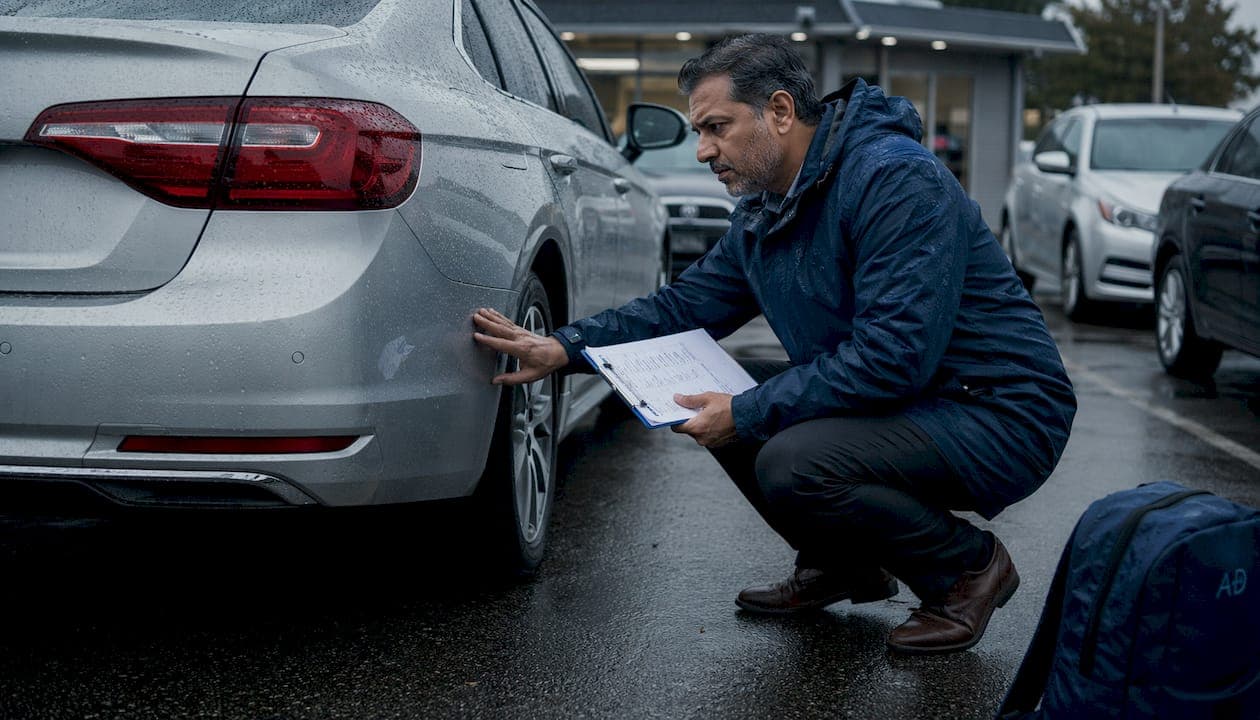
No history report replaces a physical inspection. Plan to spend at least 45 minutes on site, and never view a car in the dark or rain, since both conditions hide bodywork defects.
Visual checks to run before the test drive
- Bodywork: Look along each panel from a low angle. Ripples, mismatched paint, or uneven panel gaps suggest previous accident repairs.
- Tires: Check tread depth across the full width of each tire. Uneven wear points to alignment or suspension problems.
- Under the hood: Look for oil leaks, corroded battery terminals, and coolant that is brown rather than green or pink. Brown coolant often signals a head gasket issue.
- Interior: Test every electric window, the air conditioning, and the infotainment system. Repairs to these components are expensive.
- Underneath: Crouch down and look for rust on the sills, subframe, and exhaust. Surface rust is normal; structural rust is not.
Dashboard warning lights are major red flags indicating costly repairs. If any warning light is on during your inspection or test drive, treat it as a reason to walk away unless the seller can provide a written diagnosis and repair quote.
Pro Tip: Ask the seller to start the engine from cold before you arrive. A warm engine masks starting problems, oil smoke, and rough idling that disappear once the car reaches operating temperature.
What to evaluate on the test drive
Drive at a range of speeds, including motorway speeds if possible. Brake firmly from 40 mph in a safe area and feel for pulling to one side. Listen for knocking from the suspension over speed bumps. Accelerate hard briefly to check for hesitation or smoke from the exhaust. A pre-purchase inspection by a certified mechanic typically costs between £105 and £160 and can reveal hidden mechanical issues that no visual check will catch. That cost is small relative to a repair bill for a gearbox or engine problem discovered after purchase.
Also check the vehicle identification number against recall databases. Used car dealers can legally sell vehicles with unrepaired safety recalls. Manufacturers must fix recalls free of charge, so insist on that repair before you sign anything.
Key negotiation strategies to get the best price
Negotiation is not about aggression. It is about preparation. Buyers who arrive with data consistently pay less than buyers who arrive with enthusiasm.
- Secure pre-approved financing first. Checking your credit report and getting pre-approved for a loan before you visit any dealer shows you are a serious buyer. It also means you negotiate on the car price rather than the monthly payment, which is where dealers make their margin. Read more about negotiating used car prices in the UK for a full breakdown of tactics.
- Use the inspection findings. Every MOT advisory, every missing service stamp, and every cosmetic defect is a legitimate reason to reduce the asking price. Document them in writing before you make your offer.
- Set a walk-away price before you arrive. Decide the maximum you will pay and commit to it. Dealers and private sellers both use time pressure to push buyers past their limit. Knowing your number in advance removes that leverage from them.
- Negotiate extras when the price is fixed. If the seller will not move on price, ask for a fresh MOT, a service before collection, or an extended warranty. These have real monetary value and are often easier for dealers to concede than a cash discount.
Completing the purchase: paperwork and legal requirements
Getting the paperwork right protects you legally and proves ownership. Skipping any step creates problems when you try to sell the car or make an insurance claim.
- V5C logbook: The V5C must match the car's registration, VIN, and engine number exactly. Verify the registration number matches the car and the seller's details before you hand over any money.
- V5C/2 new keeper slip: When buying from a private seller, take the V5C/2 new keeper supplement immediately. The seller sends the main V5C to the DVLA, and you should receive your new V5C within five working days.
- Sale receipt: Get a signed receipt from any private seller. It should include the date, price, both parties' names and addresses, and the vehicle registration.
- Insurance: You must have at least third-party insurance before driving the car away. Arrange cover before collection, not after.
- Vehicle tax: Vehicle Excise Duty (VED) does not transfer with the car. Tax the vehicle online via gov.uk immediately after purchase.
Accredited dealers are more likely to provide warranty protection under the Consumer Rights Act 2015, which gives you the right to a repair, replacement, or refund if a fault emerges within 30 days of purchase. Private sales do not carry this protection, which is why the inspection stage matters even more when buying from an individual. For a full checklist of what to verify before signing, see what to check when buying a used car in the UK.
Key Takeaways
Buying a used car in the UK requires a structured approach: check the vehicle history first, inspect thoroughly, negotiate with data, and complete all legal paperwork before driving away.
| Point | Details |
|---|---|
| Run history checks first | Use the free gov.uk MOT check and a paid vehicle history report before viewing any car. |
| Inspect in daylight | Check bodywork, tires, fluids, and the interior before the test drive to catch visible issues. |
| Book a professional inspection | A mechanic's pre-purchase check costs £105–£160 and can justify a lower offer or a walk-away. |
| Negotiate with evidence | Use MOT advisories, missing service stamps, and market pricing data to support your offer. |
| Complete all paperwork | Secure the V5C/2 slip, a signed receipt, insurance, and vehicle tax before driving the car home. |
Why I always pay for the independent inspection
Most buyers skip the professional pre-purchase inspection because the car "looks fine" and they do not want to spend another £130 before they have even agreed on a price. That is the single most expensive mistake I see repeated.
I have watched buyers walk away from a car after an inspection revealed a cracked subframe, saving themselves a repair bill that dwarfed the car's asking price. I have also watched buyers skip the inspection, buy confidently, and then face a gearbox failure within three months. The inspection is not a formality. It is the only moment in the process where a qualified mechanic looks at the car with no financial interest in the outcome.
The second mistake buyers make is negotiating on emotion rather than data. Falling in love with a specific color or trim level before you know the market price hands the seller every advantage. Pull the valuation data first. Know the average price for that model, mileage, and year. Then view the car. That sequence keeps your judgment clear.
Private sellers deserve a specific note. Always meet at the seller's home address, not a car park or motorway service station. A seller who insists on a neutral location is often not the registered keeper. That single check eliminates a large category of fraud before you have even seen the car.
— Mark Bowman
Addapted gives you real-time pricing before you negotiate
Knowing the fair market value of any used car before you make an offer is the clearest advantage a buyer can have. Addapted gives you that advantage instantly.

The Addapted car valuation tool pulls real-time pricing across multiple live listings, showing you the lowest, highest, and average prices for any model and mileage combination. You can cross-reference mileage, price history, and listing details in one place, so you arrive at every viewing with the numbers already in hand. Whether you are buying from a dealer or a private seller, that data turns a guessing exercise into a confident, evidence-based decision.
FAQ
What documents do I need when buying a used car in the UK?
You need the V5C logbook, a signed sale receipt, proof of insurance, and confirmation that vehicle tax is in place before driving away. When buying privately, take the V5C/2 new keeper slip at the point of sale.
How do I check if a used car has outstanding finance?
A paid vehicle history report reveals outstanding finance, theft markers, and write-off status. These reports typically cost under £20 and are available from several UK providers.
Is it safer to buy from a dealer or a private seller?
Buying from a dealer gives you stronger legal protection under the Consumer Rights Act 2015, including the right to a refund within 30 days if a fault emerges. Private sales offer no statutory warranty.
How much does a pre-purchase inspection cost in the UK?
Independent pre-purchase inspections typically cost between £105 and £160. A certified mechanic checks the mechanical condition and conducts a test drive, often uncovering faults that justify a lower offer.
Can a dealer sell a car with an unrepaired safety recall?
Yes, dealers can legally sell vehicles with outstanding recalls. Always check the VIN against recall databases and insist the manufacturer repairs any open recall free of charge before you complete the purchase.