
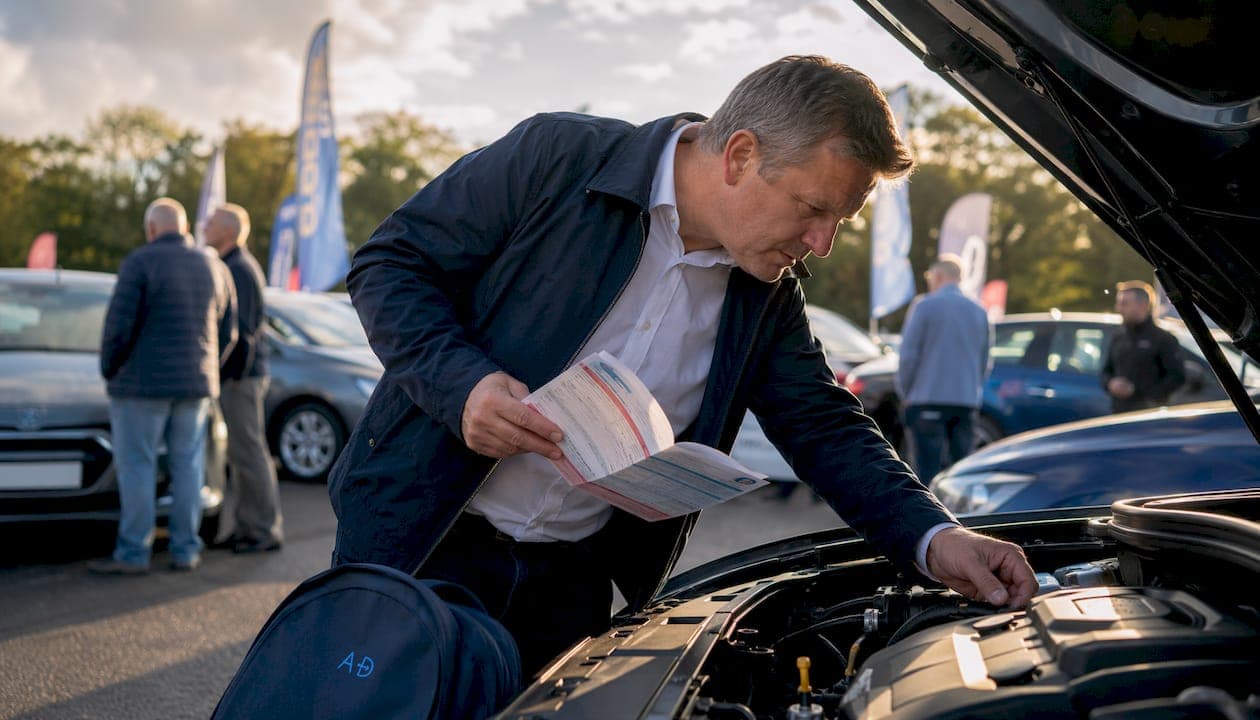
A thorough car authenticity check in the UK combines three things: official government data, physical document inspection, and awareness of fraud. Start with the DVLA vehicle enquiry service to confirm registration, make, and model. Then pull the MOT history to review mileage entries across years. Finally, inspect the V5C log book in person and match the chassis-stamped VIN and engine number against every document you have. No single step is optional.
Before you view any car, run through this checklist:
- Run the registration through the DVLA vehicle enquiry service
- Check the full MOT history for mileage consistency
- Verify the V5C log book has a DVL watermark and a clean serial number
- Physically locate and read the chassis-stamped VIN under the bonnet or door pillar
- Cross-check the VIN against the V5C and MOT records character by character
- Search for open manufacturer recalls on the government recall portal
- Consider a commercial history report to check for outstanding finance or insurance claims
- Confirm the seller's identity matches the name on the V5C
Miss any one of these and you are exposed. The sections below walk through each step in detail.
Table of Contents
- How to run an official car authenticity check using UK government tools
- What to inspect physically to confirm a vehicle's identity
- How cloning fraud works and how to spot it before you buy
- Official government checks vs. commercial history reports
- Your pre-purchase vehicle inspection checklist
- How to verify the seller's identity and ownership documents
- How to use HPI and equivalent vehicle history check services
- How long does a full authenticity check take?
- Addapted gives you instant pricing clarity alongside your checks
- Key Takeaways
- FAQ
How to run an official car authenticity check using UK government tools
The UK government provides two free databases that form the backbone of any vehicle legit check. Used together, they confirm a car's legal identity and flag the most common forms of fraud before you spend a penny.
Step 1: DVLA vehicle enquiry. Enter the registration plate at the DVLA portal. The result shows the registered make, model, color, engine size, and tax status. If any detail conflicts with what the seller told you or what you see in front of you, stop. That mismatch is a serious red flag.
Step 2: MOT history check. The MOT history service shows every test date, the recorded mileage at each test, and any advisory or failure notes. A genuine car's mileage climbs steadily year over year. A drop in mileage between tests, or a suspiciously flat reading across several years, points to mileage clocking fraud. This is one of the most reliable ways to verify a car's mileage accuracy without specialist equipment.
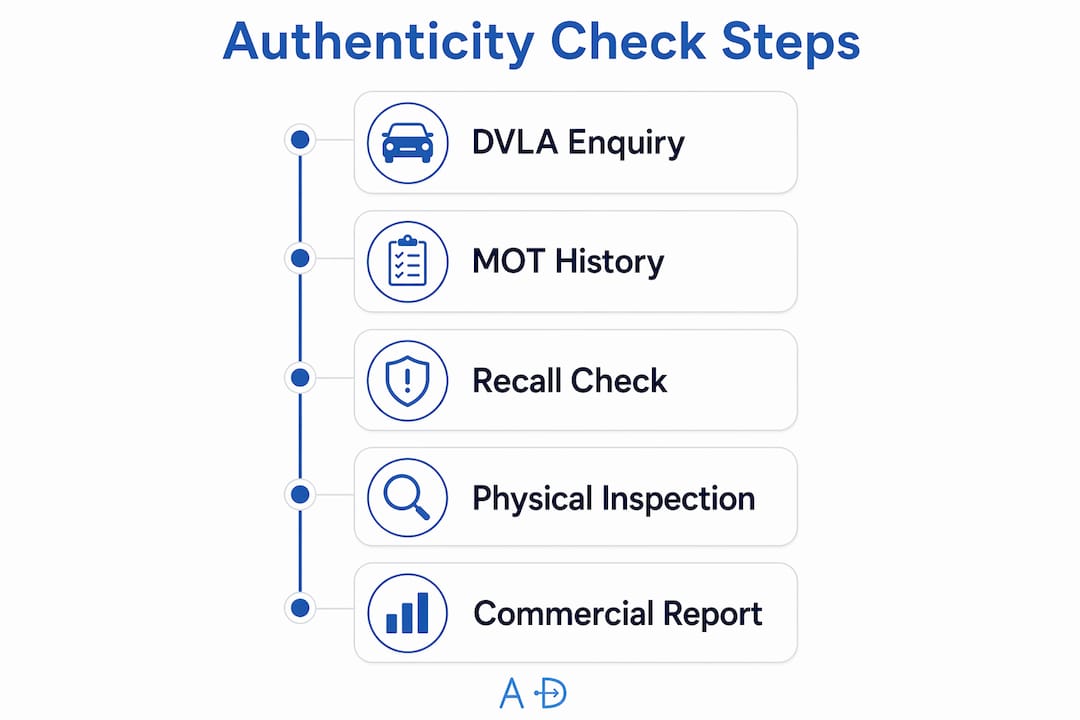
Step 3: Recall check. The government's vehicle recall checker and manufacturer websites list every open safety recall by VIN or registration. A recall is not automatically a deal-breaker, but an unaddressed one is. Sellers are required to disclose known safety issues, and an outstanding recall can affect insurance and resale value.
Each of these checks takes under five minutes. Together, they give you a verified snapshot of the car's legal identity and service history before you ever see the vehicle.
What to inspect physically to confirm a vehicle's identity
Online records only tell half the story. The other half is standing in front of the car with the V5C in your hand.
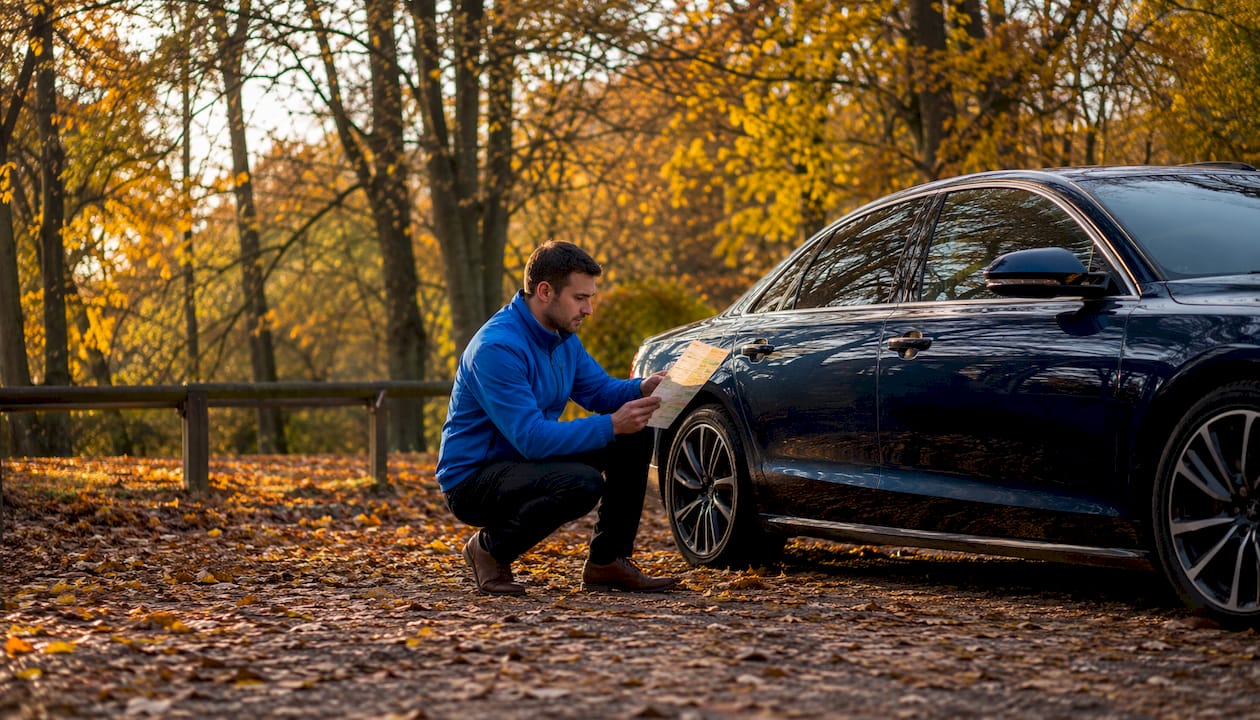
The V5C log book carries a DVL watermark visible when held up to light. The paper has a specific texture; a photocopy or a printed fake will feel noticeably different. Beyond the watermark, check the serial number printed on the document. The DVLA has published two ranges of stolen V5C serial numbers: BG8229501 to BG9999030 and BI2305501 to BI2800000. If the serial falls in either range, treat the document as stolen and report it to the police immediately.
Next, find the chassis-stamped VIN. On most cars it sits under the bonnet on the bulkhead or on the door pillar. Read every character and compare it against the V5C and the MOT history record. One wrong digit means the car's identity has been altered. The engine number, usually stamped on the engine block itself, should also match the V5C exactly.
Pro Tip: Look at the font and stamping depth of the VIN. Legitimate manufacturer stamps are uniform and deep. Re-stamped or altered VINs often show inconsistent character spacing, shallow impressions, or signs of grinding where the original number was removed. A torch and a close look take thirty seconds and can save you thousands.
Physical verification checklist:
- Hold the V5C up to light and confirm the DVL watermark
- Check the V5C serial number against the published stolen ranges
- Locate the chassis-stamped VIN and read it character by character
- Compare the VIN against the V5C, MOT history, and any commercial report
- Check the engine number on the block against the V5C
- Look for signs of VIN tampering: uneven stamping, grinding marks, or mismatched fonts
- Confirm the color, body style, and engine size match the V5C description
How cloning fraud works and how to spot it before you buy
Vehicle cloning is exactly what it sounds like: a stolen car is given the identity of a legitimate vehicle. The fraudster copies the registration plates, VIN, and sometimes even the V5C of a real car with a clean history, then sells the stolen vehicle to an unsuspecting buyer. The digital records look perfect because they belong to a real car. The problem only surfaces when the physical identifiers are checked.
A clean history report does not protect you from a cloned vehicle. That is the core danger. Buyers who rely solely on online checks and skip the physical inspection are the primary targets of this fraud.
Fraud alert: V5C serial numbers in the ranges BG8229501–BG9999030 or BI2305501–BI2800000 are confirmed stolen documents. A seller presenting one of these should be reported to the police immediately.
Warning signs of a cloned or fraudulent vehicle:
- Seller refuses to show the V5C or claims it is "in the post"
- Price is significantly below market value for the make, model, and mileage
- Seller insists on meeting in a public place rather than at the registered address
- Registration plates look new on an older vehicle
- VIN plate shows signs of tampering or replacement
- Seller is evasive about the car's full history or previous owners
- The name on the V5C does not match the seller's ID
If you suspect fraud, report it to Action Fraud (the UK's national fraud reporting center) and the police. Do not complete the purchase. Understanding how to avoid counterfeit parts and fraudulent listings in automotive sales applies the same logic: if something feels off, it usually is.
Official government checks vs. commercial history reports
Both have a role. Neither replaces the other.
| Attribute | Official government checks | Commercial history reports |
|---|---|---|
| Data source | DVLA, MOT testing records | Aggregated private databases |
| Cost | Free | Typically a modest fee |
| Registration and identity | Yes, authoritative | Yes, derived from DVLA |
| Mileage history | Yes, via MOT records | Yes, often with alerts |
| Outstanding finance | No | Yes |
| Insurance write-off history | No | Yes |
| Stolen vehicle flag | Partial (via police records) | Yes |
| Recall status | Via separate gov portal | Sometimes included |
Official DVLA and MOT records are the legal source of truth for a vehicle's registered identity. No commercial provider can override or supersede them. Where commercial reports add genuine value is in the private data layer: whether the car has outstanding finance (meaning the lender technically owns it), whether it was written off by an insurer, or whether it has been reported stolen through insurance channels.
The smart approach is to run the free government checks first, then use a commercial report to fill the gaps. Spending a small amount on a full history report before committing to a significant purchase is straightforward risk management.
Your pre-purchase vehicle inspection checklist
A physical inspection covers three areas: bodywork, the odometer, and mechanical condition. Work through them in order.
Bodywork. Look for mismatched paint panels, uneven panel gaps, or overspray on rubber seals, which suggest previous accident repair. Check that all four corners are symmetrical. Rust around wheel arches or sill edges on older vehicles is normal; hidden rust under carpets or in the boot floor is not.
Odometer verification. Cross-reference the dashboard reading against the MOT history mileage entries. The numbers should form a consistent upward line. A reading lower than the last MOT entry is impossible on a genuine car. Also check the wear on the pedal rubbers, steering wheel, and driver's seat against the claimed mileage. A car with 30,000 miles should not have a worn-through steering wheel.
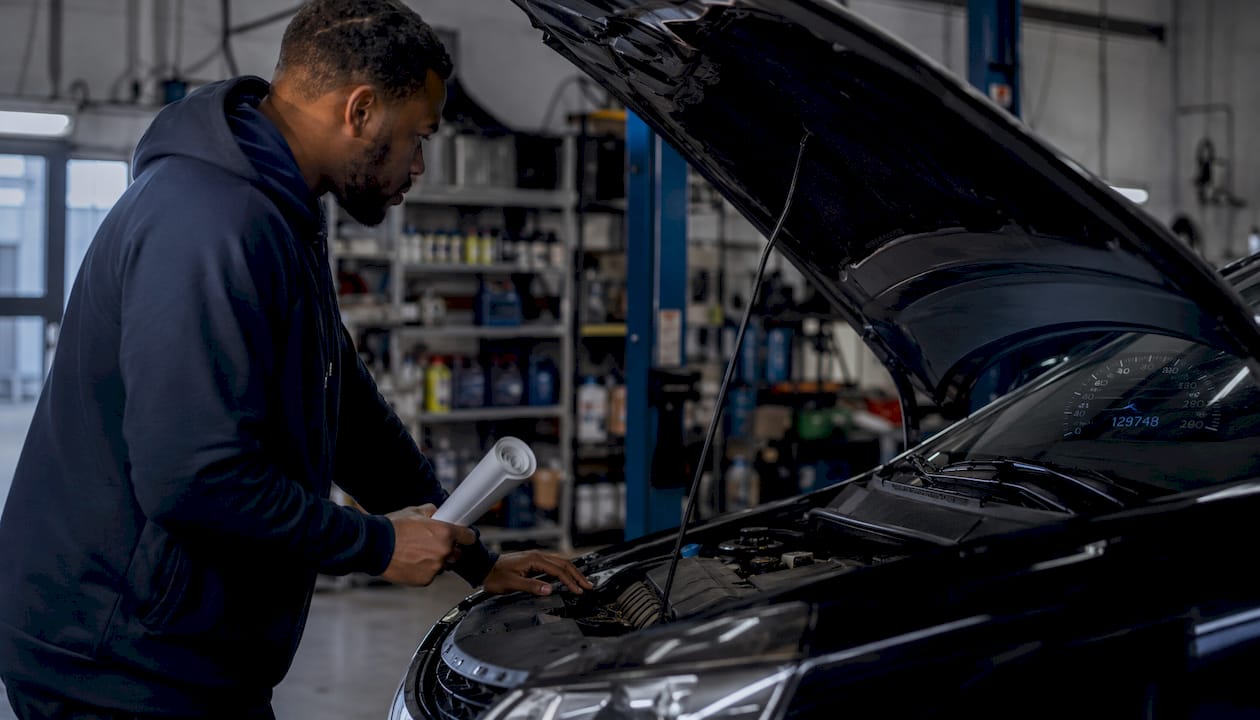
Mechanical condition. Start the engine from cold. Listen for rattles, knocking, or excessive smoke on startup. Check the oil filler cap for a creamy residue, which indicates a head gasket problem. Test all electrics: windows, mirrors, air conditioning, and every warning light. A pre-purchase inspection from a qualified mechanic, costing around £100–£150, is worth every pound on any car above £5,000. Services like pre-purchase vehicle inspection follow the same systematic approach used by professional mechanics worldwide.
How to verify the seller's identity and ownership documents
The name on the V5C must match the person selling you the car. Ask for photo ID, a driving license or passport, and compare it against the V5C. If the seller says they are selling on behalf of someone else, ask why and get a written explanation. Private sellers are not required to be the registered keeper, but any discrepancy needs a clear, verifiable explanation.
Check the seller's address. The V5C lists the registered keeper's address. If the seller wants to meet somewhere other than that address, ask why. A legitimate private seller has no reason to avoid showing you where the car is normally kept.
For dealer purchases, verify the dealer is registered with the Financial Conduct Authority (FCA) if they offer finance, and check their registration with the Motor Ombudsman or a recognized trade body. A registered dealer carries legal obligations a private seller does not.
How to use HPI and equivalent vehicle history check services
HPI Check is the most widely recognized commercial vehicle history service in the UK. A full HPI report covers outstanding finance, insurance write-off status, stolen vehicle checks, mileage discrepancies, and plate changes. The used car history check process in the UK typically starts with a free DVLA check and then layers in a paid report like HPI for the private data.
Other providers offer similar coverage at competitive prices. What matters is that the report pulls from the Finance and Leasing Association (FLA) database for finance checks and from insurance industry records for write-off status. Always confirm which databases a provider queries before paying.
One important caveat: an HPI check showing "no finance" means no finance was registered at the time of the check. It does not guarantee the car is free of all encumbrances. Always read the report's scope carefully.
How long does a full authenticity check take?
A complete check, done properly, takes a few hours spread across two stages.
Before viewing (a short period). Run the DVLA enquiry, pull the MOT history, check for recalls, and order a commercial history report. Read the report before you travel.
At the viewing (around an hour or more). Inspect the V5C, check the serial number, locate and read the VIN, inspect the bodywork, verify the odometer against MOT records, and test the mechanical condition. If you bring a mechanic, add additional time for their assessment.
Rushing either stage is where buyers get caught. The used car buying process in the UK has enough variables that a methodical two-stage approach is the only reliable way to cover all the bases.
Addapted gives you instant pricing clarity alongside your checks
Once you have verified a car's identity and history, the next question is whether the price is fair. That is where Addapted comes in. The platform pulls real-time pricing across multiple UK listings so you can see the lowest, highest, and average price for any make and model in seconds, without trawling through dozens of ads manually.

Addapted's built-in car checker tools let you analyze mileage patterns, price history, and listing details side by side, giving you the market context that official checks do not provide. You get an AI-powered valuation instantly, so you know whether the seller's asking price reflects the actual market or is inflated by several hundred pounds. It works alongside your DVLA and MOT checks, not instead of them. Start your free trial at Addapted and see what the car you are looking at is actually worth before you make an offer.
Key Takeaways
A complete car authenticity check in the UK requires official government data, physical document verification, and a commercial history report to cover every fraud risk.
| Point | Details |
|---|---|
| Start with official checks | Use the free DVLA enquiry and MOT history service to confirm registration, identity, and mileage. |
| Inspect the V5C in person | Verify the DVL watermark and check the serial number against the published stolen ranges. |
| Match the VIN physically | Read the chassis-stamped VIN character by character against the V5C and MOT records. |
| Layer in a commercial report | An HPI or equivalent check adds finance, write-off, and stolen vehicle data the government portals do not cover. |
| Use Addapted for pricing | After verifying authenticity, use Addapted's real-time price comparison to confirm the asking price is fair. |
FAQ
How do I check if a car is genuine in the UK?
Run the registration through the DVLA vehicle enquiry service, pull the MOT history, and physically match the chassis-stamped VIN against the V5C log book. All three steps together confirm the car's identity.
How do I check if a UK car dealer is legitimate?
Verify the dealer is registered with the Motor Ombudsman or a recognized trade body, and check FCA registration if they offer finance. A legitimate dealer will have a verifiable business address and a clear complaints process.
How do I check car details in the UK?
The free DVLA vehicle enquiry service returns the registered make, model, color, and tax status by registration plate. The MOT history service adds mileage records and test results. Both are available on GOV.UK at no cost.
How do I know if my car has been flagged by the police?
A commercial history report from a provider like HPI queries the Police National Computer for stolen vehicle records. You can also ask the seller to provide a report, or contact your local police if you have specific concerns about a vehicle.
What serial numbers on a V5C indicate a stolen document?
V5C serial numbers in the ranges BG8229501 to BG9999030 or BI2305501 to BI2800000 are confirmed stolen. Report any document with a serial in these ranges to the police immediately and do not proceed with the purchase.