

TL;DR:
- You must register your used car immediately with the DVLA using the green slip or form V62 if needed.
- Insurance is legally required from the moment you drive the car onto a public road, with no grace period allowed.
The moment you hand over the money for a used car, the clock starts. Before you drive a single mile on a public road, you need insurance, tax, and the right paperwork sorted. Miss any of these and you're breaking the law, not just cutting corners.
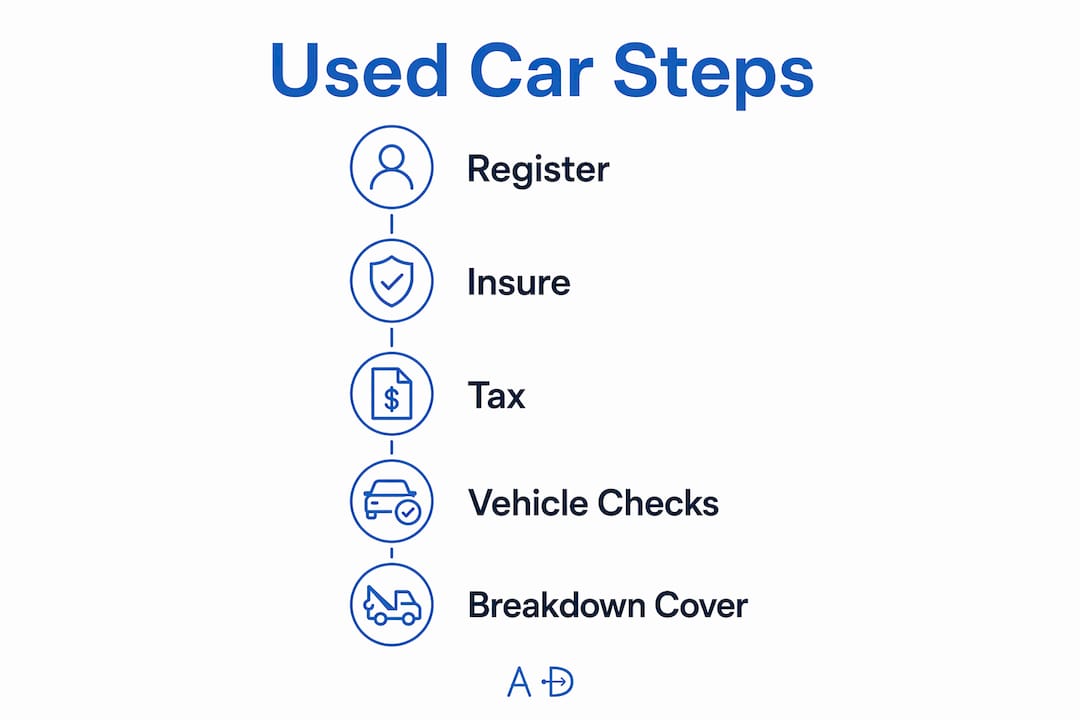
Here's what to tackle immediately after purchase:
- Register the vehicle with the DVLA using the green "new keeper" slip from the V5C logbook
- Get valid insurance before moving the car anywhere on a public road
- Tax the vehicle right away, since car tax doesn't transfer from the seller to you
- Secure all documents: V5C logbook, MOT certificate, service history, and your purchase receipt
- Run a vehicle history check if you skipped it before buying, to catch outstanding finance or write-offs
How do you register a used car with the DVLA after buying it?
Registration is the first legal step, and it's simpler than most buyers expect. If the car came with its V5C logbook, you use the green "new keeper" slip to register your vehicle with the DVLA immediately. No slip, no V5C? You'll need to apply using form V62, which costs £25 as of 2026.
- Complete the green slip and send it to the DVLA, or register online at gov.uk
- Expect your new V5C logbook to arrive by post within 6 weeks in most cases
- If your address has changed since your last vehicle, update your details with the DVLA at the same time
- Never drive the car while waiting for the new V5C without confirming your registration is in process
Mark Bowman notes that keeping thorough paperwork after purchase is what protects your rights and keeps you compliant with DVLA registration and tax obligations. It sounds obvious, but a surprising number of buyers file the green slip away and forget to actually send it.
Do you need insurance before driving a used car home?
Yes, and there is no grace period. Driving uninsured is illegal from the very first moment you take the car onto a public road, full stop. The UK has no equivalent of the US "30-day grace period" that some buyers assume exists here.
Pro Tip: Arrange your insurance the day before you collect the car. Call your insurer with the registration number and confirm coverage starts from the collection date, not the policy renewal date.
- Contact your existing insurer to add the new vehicle or switch the policy over
- Consider temporary or short-term insurance if you're not ready to commit to a full annual policy
- Third-party insurance is the legal minimum, but comprehensive cover protects you against damage to your own vehicle too
- Check the Motor Insurance Database after setting up your policy to confirm the car shows as insured
For newly purchased used cars, understanding insurance and dent repair coverage is worth a quick read before you discover a pre-existing dent the hard way.

How to tax your used vehicle after buying it in the UK
Vehicle tax does not transfer from the seller to you when a car changes hands. The seller gets a refund on any remaining tax, and you start from zero. Taxing the car before driving it is a legal requirement, not a suggestion.
Steps to tax your car:
- Locate the reference number on the green "new keeper" slip from the V5C
- Go to gov.uk/vehicle-tax and pay by debit card, credit card, or set up a direct debit
- Alternatively, call the DVLA to arrange tax by phone before you drive away
- Confirm the tax status using the official government vehicle enquiry service
A few things to watch for:
- If the previous owner had a direct debit for road tax, that stops automatically when the DVLA processes the change of keeper
- You do not need to cancel it yourself, but confirm the transfer has been processed
- Keep your tax payment confirmation as proof until the new V5C arrives
What paperwork should you keep after buying a used car?
The documents you hold after purchase are your legal safety net. Lose them and you lose your ability to prove ownership, contest faults, or claim a refund.
| Document | Purpose |
|---|---|
| V5C logbook | Proves registered keeper status; needed for tax, insurance, and resale |
| MOT certificate | Confirms roadworthiness; required for taxing the vehicle |
| Service history | Shows maintenance record; affects resale value and reliability assessment |
| Purchase receipt | Documents the transaction; essential for legal disputes |
| Vehicle history report | Reveals finance, write-offs, or mileage discrepancies |
A private history check costs up to £20 and can surface problems that no visual inspection will catch, including outstanding finance that could see the car repossessed even after you've paid for it. Run one if you didn't before buying. Addapted's AI valuation platform can also flag anomalies in mileage or pricing history that suggest something is off with a listing.
When checking the V5C itself, verify it carries a "DVL" watermark. The DVLA flags certain serial number ranges as potentially linked to stolen logbooks, so if anything looks off, contact the police before proceeding.
What are your legal rights if problems arise after buying a used car?
Your rights depend heavily on who you bought from. Dealer purchases carry stronger protections than private sales, including the right to repair, compensation, or a refund if the car was misrepresented.
- Dealer purchase: You have rights under the Consumer Rights Act 2015. If a fault appears within 30 days, you can reject the car outright.
- Private sale: Cars are typically sold "as seen," which limits your recourse significantly. Keep your signed receipt and all correspondence.
- Document everything: photos, messages, emails, and any verbal promises in writing
- Report fraudulent sales to Trading Standards or Action Fraud
Pro Tip: Contact Citizens Advice early if you suspect misrepresentation. They can clarify your options before you spend money on legal fees.
For private purchases, best practice is to get a written receipt signed by both parties confirming the car is "sold as seen, tried and approved without guarantee." This protects both sides and gives you a paper trail if disputes arise later.
What vehicle checks should you do right after buying?
Even if the car passed its MOT and looked fine on the test drive, a post-purchase inspection catches things that a quick look never will. Experts at the RAC recommend an immediate "fresh start" service replacing filters and fluids, regardless of what the seller claimed about recent maintenance.
Pro Tip: Book a full service within the first two weeks. Changing the oil, coolant, and air filter gives you a clean baseline and often reveals issues the previous owner knew about but didn't disclose.
- Check all dashboard warning lights when you first start the engine
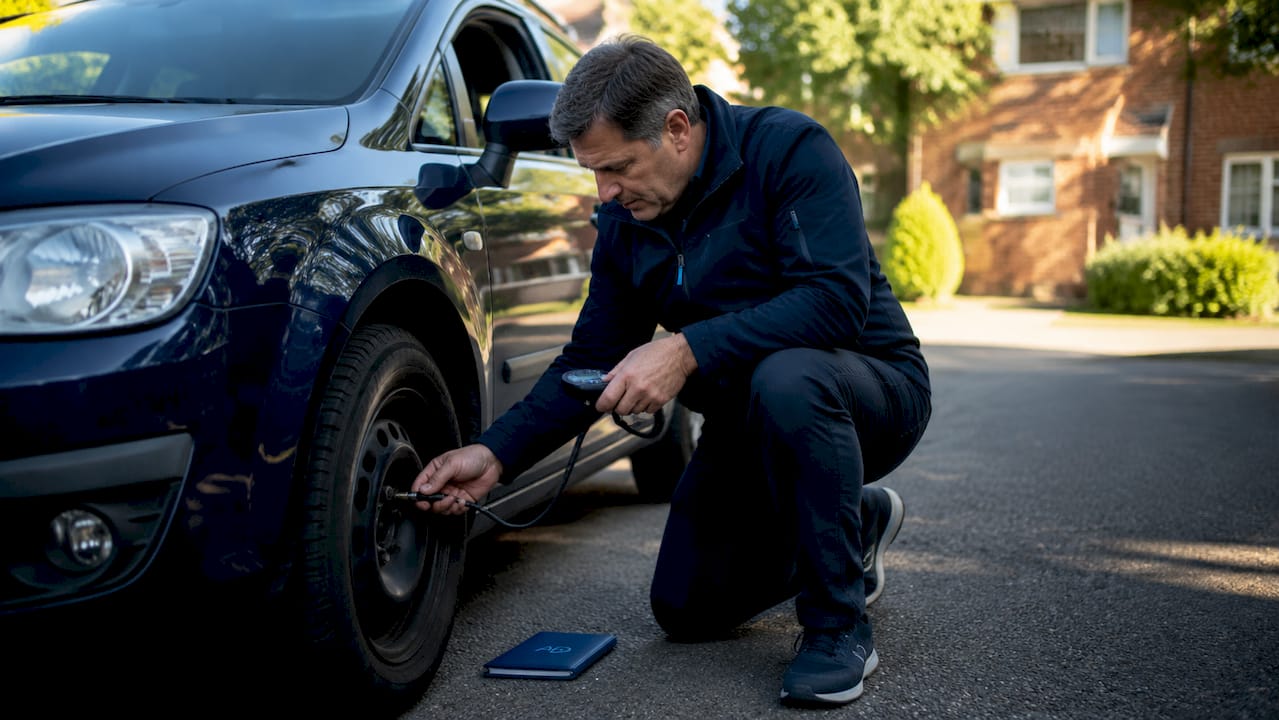
- Verify tire pressures against the figures in the owner's manual or door sill sticker
- Read the owner's manual for your specific model, focusing on warning lights, safety features, and recommended service intervals
- Test all lights, wipers, windows, and electronic features before assuming they work
A pre-purchase vehicle inspection framework applies equally well post-purchase: check brakes, suspension, belts, and fluid levels systematically rather than at random. If you find issues, get quotes from a franchised dealer for your car's brand, where technicians are trained specifically on that model.
Why you should arrange breakdown cover immediately after buying
The first few weeks with a used car are when you're most exposed. You don't yet know the vehicle's quirks, and any hidden issues tend to surface early. Arranging breakdown cover immediately after purchase is the standard recommendation from motoring experts for exactly this reason.
- Breakdown cover kicks in where insurance stops: it gets you home when the car won't start, not just when there's an accident
- Look for policies that include home start, since many breakdowns happen on the first cold morning in your own driveway
- Consider whether roadside-only cover suits you or whether national recovery is worth the extra cost
- Extended warranties from dealers or third-party providers add another layer, covering mechanical failures that breakdown cover won't touch
Breakdown cover and insurance work together, not in competition. One handles roadside emergencies; the other handles accidents and liability.
Common mistakes UK used car buyers make after purchase
The most expensive errors tend to be the most avoidable ones.
- Driving before taxing or insuring: Both are illegal and carry fines, penalty points, and potential vehicle seizure
- Not checking for outstanding finance: A vehicle history check is the only reliable way to confirm the car is free of debt
- Trusting seller service claims without verification: Get the fresh service done regardless
- Losing the purchase receipt: Without it, proving what was agreed becomes very difficult
"Understanding and keeping thorough paperwork after purchase is essential to protecting your rights and enabling proper vehicle registration and tax compliance." — Mark Bowman, via Addapted
Addapted's AI-powered valuation tools help buyers verify they paid a fair price and can flag mileage or pricing anomalies that suggest a car's history doesn't add up. Running a check before and after purchase gives you a complete picture.
Top UK used car dealers with strong post-purchase support
Buying from a reputable dealer changes what happens after the sale. Three dealers worth knowing:
| Dealer | Location | Key Post-Purchase Features |
|---|---|---|
| Deals On Wheels London | London | Extended warranties, official paperwork handling, after-sales support |
| Used Cars UK | UK-wide | Wide stock across fuel types; £100 administration fee; searchable inventory |
| UK AUTO SALES LIMITED | UK | Warranty options, financing, structured after-sales assistance |
Used Cars UK lists a £100 administration fee on all vehicle sales and covers petrol, diesel, electric, and hybrid stock. UKCARRS LTD operates as a marketplace with advanced search filters and detailed listings to help buyers compare models before committing. Buy and Sell your Car (Used Car London) and We Buy Left Hand Drives (Sell My LHD Car UK) serve more specialized needs, the latter focusing specifically on left-hand-drive vehicles for buyers importing or relocating.
Key Takeaways
Buying a used car in the UK legally requires you to register with the DVLA, obtain insurance, and tax the vehicle before driving it on any public road.
| Point | Details |
|---|---|
| Register immediately | Use the green V5C slip or apply via form V62 (£25 in 2026) if the logbook is missing. |
| No insurance grace period | UK law requires valid insurance from the first moment you drive on a public road. |
| Tax does not transfer | You must tax the car yourself before use; the seller receives a refund on unused tax. |
| Run a history check | A check costing up to £20 can reveal outstanding finance, write-offs, or mileage fraud. |
| Know your rights by purchase type | Dealer purchases give stronger legal protections than private sales under UK consumer law. |
FAQ
How long do you have to get insurance after buying a used car in the UK?
There is no grace period. You must have valid insurance before driving the car on any public road, starting from the moment of purchase.
Can you change your mind after buying a used car in the UK?
It depends on where you bought it. Dealer purchases may allow rejection within 30 days under the Consumer Rights Act 2015 if a fault is found; private sales are typically "as seen" with very limited recourse.
Do you need to tax a car as soon as you buy it in the UK?
Yes. Vehicle tax does not transfer from the seller, so you must tax the car before driving it. Use the green "new keeper" slip from the V5C to tax online at gov.uk/vehicle-tax.
What is the 2-second rule in the UK?
The 2-second rule is a safe following distance guideline: keep at least a 2-second gap between your car and the vehicle ahead in normal conditions, doubling to 4 seconds in wet weather.
What should you check on a used car right after buying it?
Check all warning lights, tire pressures, fluid levels, and that all lights and electronics work. Book a full service within the first two weeks to establish a reliable maintenance baseline.